
Use your mobile phone to interact with additional content
[Project Overview]
TheraPeace is a therapy extension app designed to support individuals who are already engaged with a therapist but require more frequent sessions, faster response times, and continued mental health support between appointments.
The app is not a replacement for therapy, but an addition supervised by a licensed therapist, providing AI-assisted exercises, mood tracking, and structured check-ins. It was designed to bridge the gap between sessions, alleviate pressure on overbooked therapists, and offer on-demand, ethical support when it's needed most.
[Industry]
Interactive Design
[My Role]
Creative Head
[Platforms]
Android
[Timeline]
November 2024
[Problem Statement]
Current therapy apps like ChatGPT-based solutions are standalone tools and are not medically supervised, which makes them unreliable for mental health support.
There are serious privacy concerns associated with current AI therapy apps, making users hesitant to trust or engage with them.
In-person therapy sessions are expensive and infrequent, which reduces the effectiveness of ongoing treatment.
There is a chronic shortage of licensed therapists, leading to long waiting times and limited access to timely care.
over 122 million Americans live in areas with a shortage of mental health professionals
Therapy in the U.S. range from $100-$200/ per hour, making consistent treatment financially challenging.
A study found that 44% of mental health apps share user data with third parties, raising significant privacy concerns.
"How might we provide timely, affordable, and trustworthy mental health support in a world facing a therapist shortage?"
[Research & Key Insights]
[Persona]

Ankita Sharma
Marketing Manager
Age: 27
Location: New York City
Tech Proficiency: Moderate
Gender: Male
[Background]
Attends therapy weekly for anxiety management
Uses journaling as a self-care method but struggles to stay consistent
Finds mindfulness helpful but forgets to practice during high-stress periods
[Needs & Goals]
A gentle reminder system between therapy sessions
Guided breathing or grounding tools during anxiety episodes
A private and judgment-free space for emotional check-ins
Understanding the Problem
Many individuals wait weeks or even months for therapy appointments.
Therapists are overwhelmed and overbooked.
Cancer patients, survivors, and others facing chronic illness often need emotional support between sessions.
People are already turning to AI-based platforms like ChatGPT for mental health support.
While AI tools are accessible and fast, they aren't safe or tailored for deep mental health issues. They lack human supervision and often can't identify moments when a user might need immediate or escalated help. Most importantly, privacy remains a huge concern—users' emotional data can be collected or misused by third-party platforms.
Target Users
People comfortable using mobile apps for personal well-being
Users who want to make the most of their therapy sessions by engaging in reflective practices between appointments
Individuals currently seeing a licensed therapist

Pain Points
AI responses lack depth
[Ideation & Process]
First we need to understand how therapy sessions work. From out personal experience we understand that therapists ask [Question from Question] so we reach the conclusions by ourselves.

Key Insights
AI can help with structured journaling, mood tracking, and daily check-ins.
Supervision by a licensed therapist ensures ethical, appropriate care.
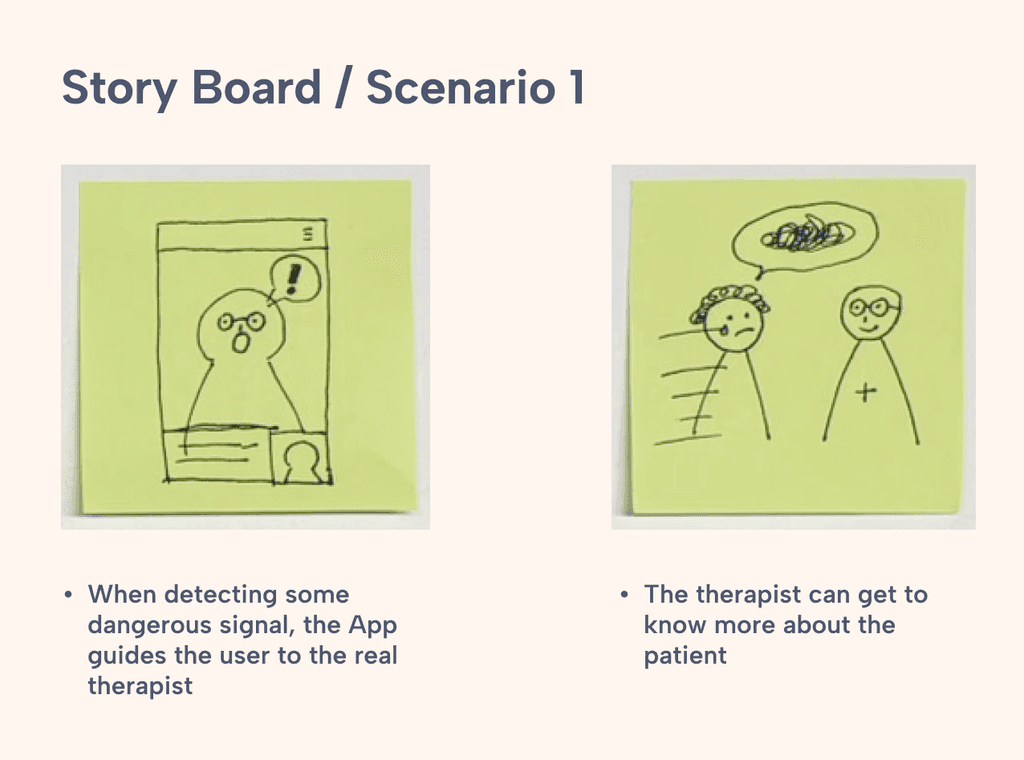
Therapists can be notified when intervention is needed, reducing their constant workload.
Data is only shared with the supervising therapist—never with third parties.
TheraPeace is not a chatbot pretending to be a therapist—it's a bridge between human sessions.




[Reflections]
What worked well:
We created a thoughtful idea and implemented it efficiently in Figma
Clear roles in the team helped us work productively
What we’d improve:
Conduct proper user testing and interviews to validate assumptions
Dive deeper into the emotional experience of therapy clients
Expand features with therapist integration and custom content
